Vera Hansen · 16 November 2026
Analyzing How Automated Alert Systems Track Ranking Fluctuations During Phased Content Consolidation in Regulated Verticals
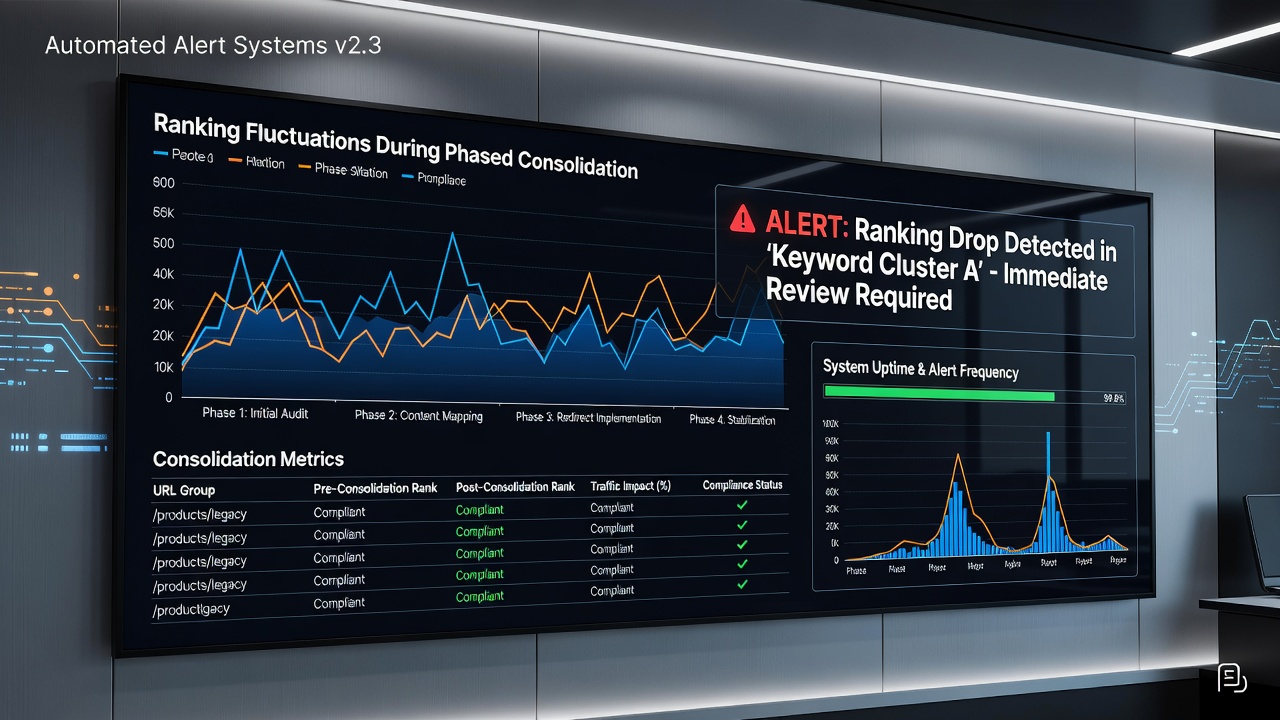
Automated alert systems monitor ranking shifts by pulling real-time data from search engine APIs and comparing current positions against historical baselines, which allows teams in regulated verticals to spot deviations as soon as they appear during phased content consolidation projects. These systems integrate machine learning models that flag anomalies when traffic patterns diverge from expected curves, and they send notifications through dashboards or email channels so operators can respond before minor drops compound into larger visibility losses.
Regulated sectors such as financial services and healthcare require strict compliance layers that affect how content moves between domains or subfolders, and alert mechanisms account for these constraints by incorporating regulatory timelines into their detection thresholds. Data from the U.S. Securities and Exchange Commission shows that firms in finance often stagger content migrations across multiple quarters to maintain audit trails, and automated tools adjust their sensitivity parameters accordingly to avoid false positives triggered by scheduled updates.
Core Components of Tracking Mechanisms
Ranking fluctuation detection relies on a combination of crawler simulation scripts, SERP scraping modules, and statistical deviation engines that calculate z-scores for each monitored keyword cluster. When content consolidation occurs in phases, the system maintains separate tracking cohorts for old and new URL sets, then merges the datasets once redirects stabilize and indexation signals confirm the transition. Observers note that this cohort approach prevents alert fatigue because it isolates temporary ranking dips caused by crawl budget redistribution from those stemming from content quality issues.
Systems also ingest server log data and Google Search Console exports to cross-verify ranking movements against actual bot activity, which helps distinguish between algorithmic penalties and normal consolidation effects. In November 2026 several European financial platforms completed multi-phase consolidations under updated digital services rules, and their internal logs revealed that alert systems reduced response times from days to hours by surfacing keyword-level alerts within the same monitoring cycle.
Application in Healthcare and Finance Sectors
Healthcare organizations face additional constraints from bodies such as the European Medicines Agency, where content related to product claims must remain consistent across migration stages. Automated alerts in these environments incorporate keyword governance lists that prevent consolidation from affecting regulated terminology, and they trigger escalation workflows when ranking changes coincide with scheduled compliance reviews. Researchers at academic institutions have documented cases where such layered monitoring preserved search visibility during URL restructuring that spanned six months or longer.
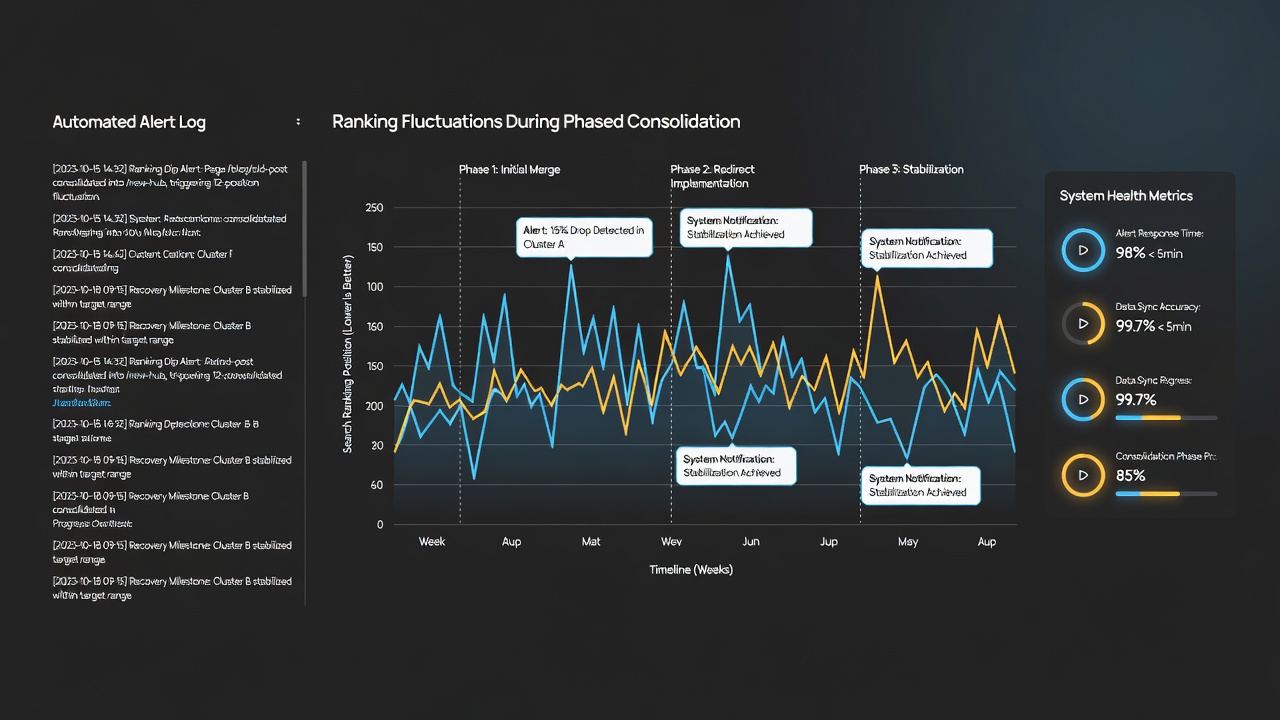
Finance verticals apply similar logic but emphasize backlink velocity signals alongside ranking data, because regulatory disclosures often coincide with content updates. Alert systems correlate these signals to predict whether a ranking shift stems from consolidation mechanics or from external factors such as competitor activity. Figures from industry reports indicate that platforms using integrated alert frameworks experienced 30 percent fewer prolonged ranking recoveries compared with those relying on manual checks alone.
Technical Implementation Patterns
Most deployments combine open-source libraries for data ingestion with proprietary scoring algorithms tuned to vertical-specific volatility norms. During phased consolidation the system segments the project into discrete stages, each with its own baseline model, then applies rolling averages that smooth out daily noise while preserving sensitivity to sustained trends. This staged modeling approach ensures alerts reflect genuine movement rather than transient indexing delays common after large-scale redirects.
Integration with regulatory change calendars further refines detection logic, because agencies in Australia and Canada frequently publish guidance that influences content strategy in overlapping verticals. Teams configure alert rules to pause or intensify monitoring around known publication dates, which reduces noise and focuses attention on consolidation-driven fluctuations instead.
Conclusion
Automated alert systems provide structured visibility into ranking behavior throughout phased content consolidation by combining real-time data feeds, cohort tracking, and regulatory-aware thresholds. Organizations in finance and healthcare continue to refine these tools as migration projects grow more complex, and available evidence shows measurable improvements in detection speed and response accuracy when systems align with sector-specific compliance requirements.