Leon Fischer · 2 November 2026
Examining user interface adaptations in SEO analytics tools for handling multi-regional domain management scenarios
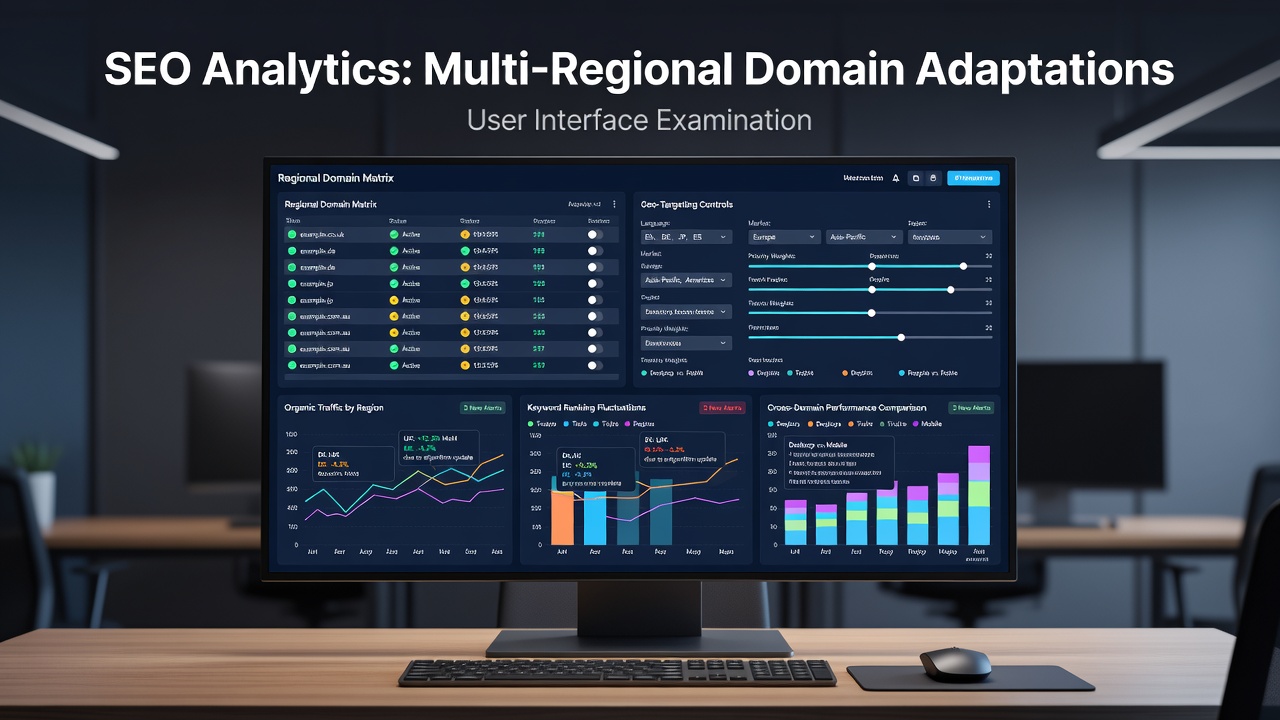
SEO analytics tools have incorporated specific interface changes to address the demands of multi-regional domain management, where organizations operate across country code top-level domains and language variants. These adaptations include region selectors placed prominently in navigation bars, alongside filters that isolate performance metrics by geographic targeting parameters. Data from search console integrations shows that platforms now surface hreflang validation warnings directly within domain overview panels, allowing users to cross-reference implementation errors across multiple properties without switching accounts.
Core interface elements for domain segmentation
Developers at major analytics providers have introduced tabbed layouts that separate global rollups from individual regional views, and these tabs often feature collapsible sub-menus listing active ccTLDs alongside their corresponding subfolder configurations. When users select a particular region, the interface updates metric cards to reflect localized search volume estimates, click-through rates, and impression data pulled from verified properties in tools such as Google Search Console. Researchers at institutions studying digital infrastructure note that such segmentation reduces the cognitive load associated with monitoring crawl budget allocation across separate domains.
Visual mapping components appear in several suites, rendering interactive world maps where color gradients indicate indexing status or organic visibility per country. Hover actions on these maps trigger side panels containing granular details about server location signals and geotargeting directives set in Google Search Console. According to documentation from Google developers, correct implementation of these directives influences how search engines assign regional relevance, and updated interfaces now flag mismatches between declared targets and actual server responses.
Handling hreflang and localization signals
Analytics interfaces have added dedicated sections for reviewing hreflang tag clusters, displaying them as node-link diagrams that connect equivalent pages across regional domains. Users can expand individual nodes to inspect canonical declarations and alternate URL annotations, with color coding highlighting discrepancies that may affect indexing. Studies from academic groups focused on web standards indicate that consistent application of these annotations correlates with improved visibility in localized search results, prompting tool vendors to embed validation routines directly into the reporting workflow.

By November 2026, several platforms had integrated automated checks against updates in search engine handling of international signals, surfacing alerts when new regional domains appeared in a monitored portfolio. These alerts link to configuration wizards that guide users through property verification steps for additional ccTLDs, including DNS record uploads and ownership confirmation flows. Industry reports from organizations tracking web governance highlight that timely verification remains essential for maintaining accurate data aggregation in multi-regional setups.
Data privacy and compliance overlays
Interface adaptations also address regulatory requirements that differ by jurisdiction, with consent management toggles appearing in data export sections for regions governed by frameworks such as the EU's digital regulations. Users encounter prompts that restrict metric sharing based on selected domains, ensuring alignment with local data handling rules. Sources from the Australian Competition and Consumer Commission outline similar expectations for transparency in analytics handling, and tool interfaces now embed region-specific compliance labels next to export buttons.
Dashboard customization options allow teams to create saved views that combine metrics from multiple domains while applying uniform filters for device type or query category. Export functions generate reports segmented by region, and these outputs include footnotes referencing the source properties used for aggregation. Observers note that such features support audit trails required during compliance reviews.
Conclusion
SEO analytics platforms continue to refine their interfaces to accommodate the operational realities of multi-regional domain portfolios through targeted UI components, validation tools, and compliance features. These changes reflect ongoing adjustments to search engine requirements and regulatory landscapes, enabling structured oversight of performance data across diverse geographic contexts.