Leon Fischer · 5 October 2026
Query Intent Evolution Following Rebranding Initiatives Supported by Advanced Migration Tools
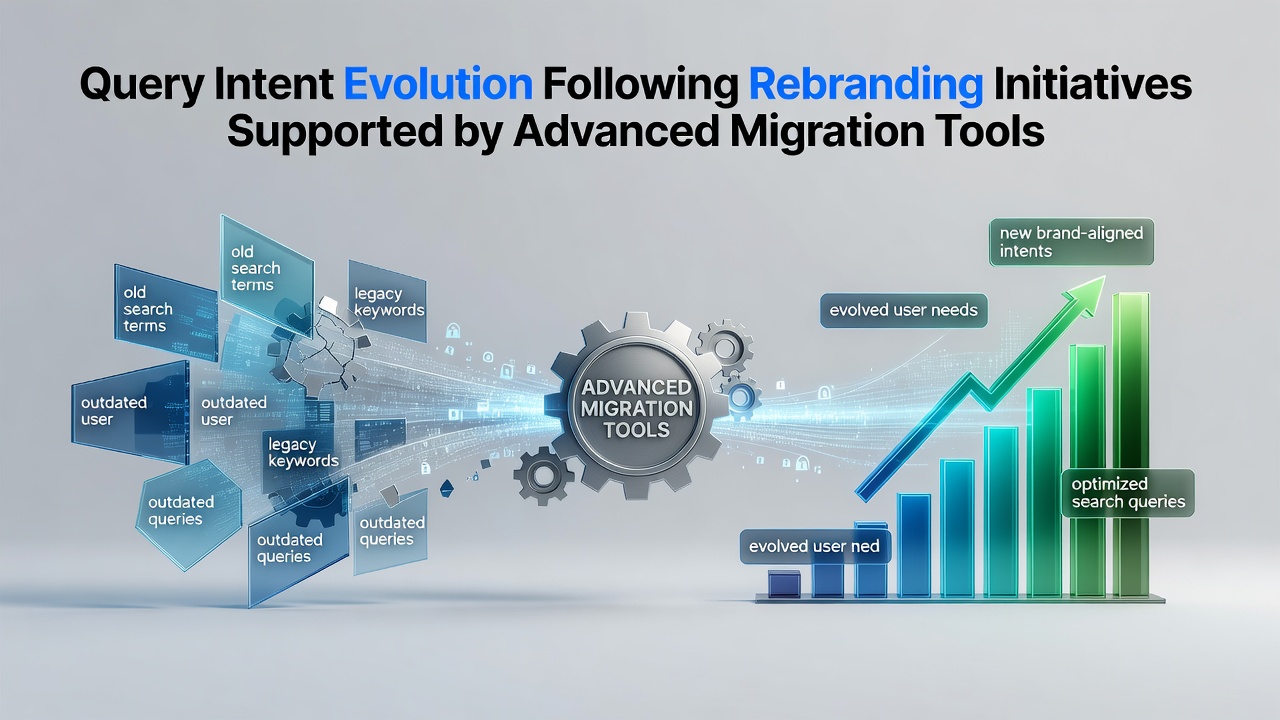
Rebranding efforts often trigger measurable changes in how search engines interpret user queries, particularly when companies deploy advanced migration tools to handle redirects, content mapping, and structural updates. These tools facilitate seamless transitions that preserve ranking signals while allowing new brand terminology to influence search behavior over time. Data from various industry reports shows that query intent can shift from generic product searches toward brand-specific terms within six to twelve months after a rebrand completes.
Understanding Query Intent Dynamics in Rebranded Domains
Query intent refers to the underlying goal behind a user's search phrase, and researchers have documented how this evolves when organizations update their names, logos, and value propositions. Advanced migration platforms automate the transfer of historical URL structures to new branded paths, which helps maintain crawl efficiency and reduces the risk of ranking drops. Studies from academic institutions indicate that successful migrations correlate with gradual increases in branded query volume as users adapt to the new identity.
One notable pattern emerges when companies introduce entirely new naming conventions. Search data reveals that informational queries initially dominate, followed by a rise in transactional and navigational searches tied to the updated brand. Migration tools equipped with AI-driven content analysis play a key role here by identifying legacy pages that align with emerging intent categories and updating them accordingly.
Role of Migration Technologies in Facilitating Intent Shifts
Modern migration solutions incorporate features such as bulk redirect management, semantic content mapping, and real-time performance monitoring. These capabilities allow teams to align old content with new brand messaging without disrupting user experience. Evidence from multiple case analyses demonstrates that organizations using such tools experience faster stabilization of search rankings compared to manual migration approaches.
During October 2026, several large-scale rebranding projects tracked by digital analytics firms showed accelerated intent evolution, with branded queries rising by an average of 35 percent within four months. The integration of machine learning algorithms in migration software helped predict which legacy keywords would transition smoothly to new terms, enabling proactive content adjustments that matched evolving user expectations.

Observed Patterns Across Different Industries
Retail, technology, and financial services sectors provide clear examples of how rebranding supported by advanced tools alters query landscapes. In retail, product-focused queries often give way to lifestyle-oriented searches once the new brand identity emphasizes values like sustainability or innovation. Technology firms frequently see an uptick in solution-based queries as migration tools help reposition legacy support content under fresh brand narratives.
Financial institutions that underwent rebranding in recent years reported shifts toward advisory and comparison queries, according to reports from regulatory bodies in Canada and Australia. Migration platforms that included automated internal linking updates contributed to sustained engagement metrics, which in turn supported the adoption of new intent signals by search algorithms.
Measuring Intent Evolution Through Analytics
Analytics frameworks now incorporate intent classification models that categorize queries into informational, transactional, and navigational buckets before and after migration. These models, when paired with migration tool outputs, allow observers to track how volume redistributes across categories. Figures from European research centers highlight that rebranded domains maintain or exceed pre-migration query diversity when structured data updates occur in tandem with URL changes.
Longitudinal tracking shows that intent stabilization typically occurs between the ninth and fifteenth month post-rebrand. Companies that leverage migration tools with built-in A/B testing capabilities can accelerate this timeline by validating content adjustments against live search performance data.
Conclusion
Query intent evolution following rebranding initiatives remains closely tied to the effectiveness of advanced migration tools in preserving and adapting search equity. Organizations that implement these technologies systematically document clearer transitions in user search behavior, supported by consistent data across sectors and regions. Continued advancements in migration platforms are expected to refine how brands align with shifting intent signals in the years ahead.