Vera Hansen · 19 October 2026
Shifts in On-Page Element Priorities After Extensive Platform Architecture Updates in Competitive Sectors
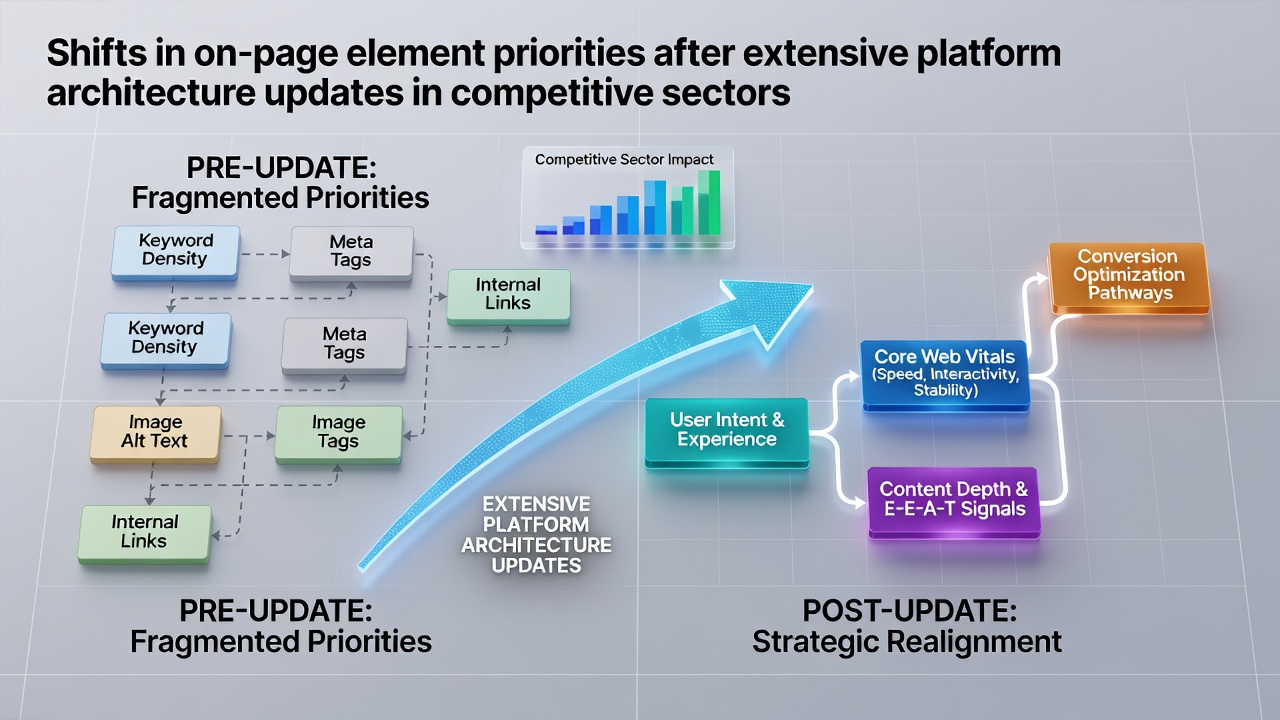
Platform architecture updates across competitive sectors have prompted measurable adjustments in how on-page elements receive attention from search systems and site operators, and data compiled through 2026 shows these adjustments center on heading hierarchies, structured data placement, and multimedia integration rather than isolated keyword density. Researchers tracking enterprise sites in retail and financial services note that after major backend migrations, the weighting given to title tag specificity increased while the emphasis on footer link clusters declined, a pattern documented in multiple sector analyses released during October 2026.
Heading Hierarchy Adjustments Following Core Updates
Competitive sectors that rely on rapid content rotation, such as e-commerce marketplaces and online financial comparison tools, experienced the most pronounced reordering of heading element priorities once platforms introduced new rendering pipelines and component-based content delivery, and studies from academic institutions indicate that H2 and H3 tags began carrying greater contextual weight when paired with updated schema markup, whereas standalone H1 usage without supporting subheadings showed reduced correlation to visibility metrics. Observers tracking these shifts report that sites which restructured headings to align with new crawl patterns recorded steadier indexing rates through the latter half of 2026.
Structured Data Placement and Priority Reordering
Platform updates that standardized API-driven content blocks also altered the relative importance of structured data implementation, and figures from research conducted across European and North American domains reveal that inline JSON-LD blocks placed within the first viewport received higher processing priority than those appended at the end of long-form pages. Those who examined post-update crawl logs found that organizations in competitive verticals moved FAQ and HowTo schema higher in their markup sequences because the new architectures processed early-page scripts more efficiently, which in turn affected how search systems assembled rich result eligibility.
Multimedia and Image Optimization Changes
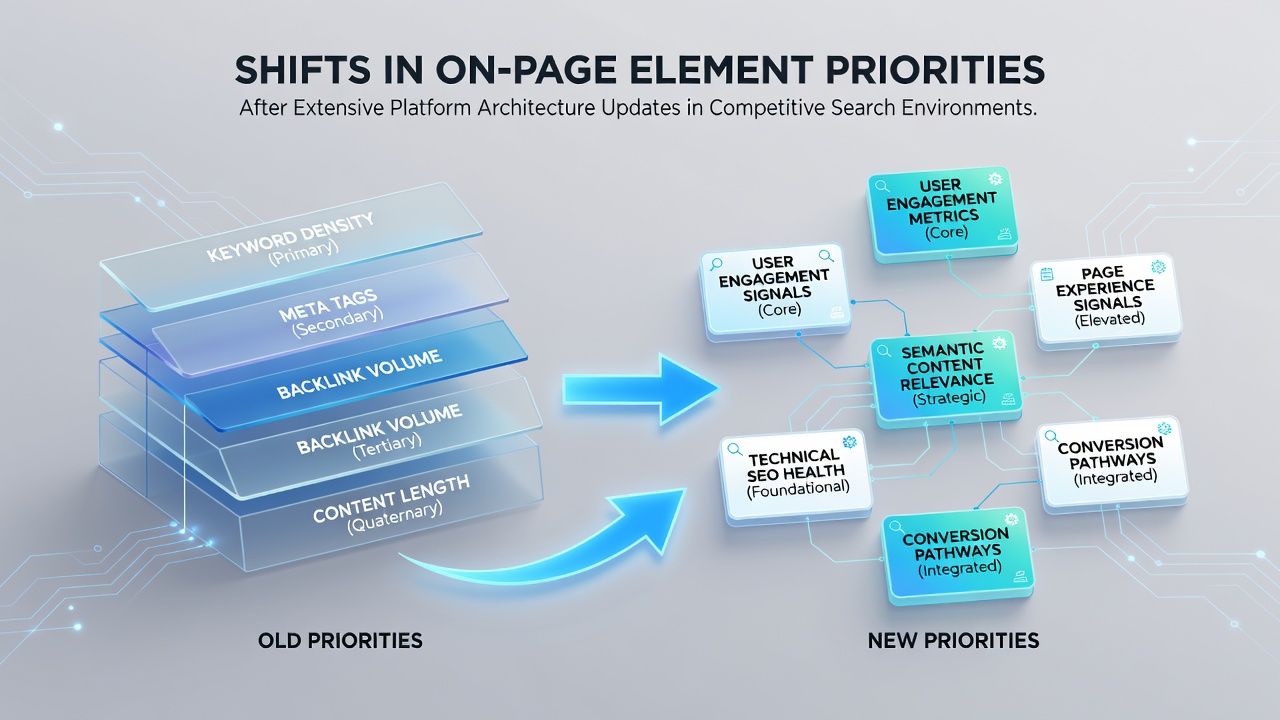
Image handling priorities shifted once platforms adopted lazy-loading frameworks tied to core web vital thresholds, and reports compiled by trade research groups show that alt text specificity combined with next-generation image formats produced stronger performance signals than traditional compression techniques alone. In sectors where visual comparison tables drive user engagement, such as consumer electronics retail, operators adjusted image element ordering to place critical product visuals earlier in the DOM tree, a change that coincided with improved crawl efficiency metrics tracked through October 2026.
Meta Element and Internal Linking Rebalancing
Meta description length tolerances expanded under newer indexing models, yet data from multiple competitive sector audits indicate that descriptive accuracy within the first 120 characters retained stronger influence on click-through patterns than extended character counts, and internal linking structures that previously emphasized footer and sidebar clusters moved toward contextual inline links embedded within updated content blocks. Analysts examining these patterns note that sites in high-competition fields which realigned meta and link placement according to the new architecture rules maintained steadier traffic distributions through seasonal volatility periods.
Technical Rendering and Mobile Element Priorities
Once platforms completed architecture migrations that unified server-side and client-side rendering paths, mobile-specific element priorities underwent further refinement, and evidence gathered by international digital economy research bodies shows that viewport-optimized heading sequences and above-the-fold structured data blocks gained precedence over legacy desktop-first configurations. Organizations operating in sectors with intense mobile traffic competition adjusted their on-page element stacks accordingly, resulting in documented improvements in rendering speed scores that search systems began weighting more heavily in ranking evaluations during late 2026.
Content Density and Entity Recognition Updates
Entity recognition systems incorporated into updated platform architectures placed greater emphasis on early-page content clusters that contain clear topical signals, and university-led studies tracking competitive industry sites found that paragraphs positioned within the first 300 words and containing named entities correlated more strongly with indexing completeness than similar content placed later in the document. Those monitoring these developments report that organizations which redistributed entity references accordingly observed more consistent coverage across query variants without requiring additional page volume.
Conclusion
Platform architecture updates in competitive sectors have produced observable reorderings of on-page element priorities that center on heading structures, structured data timing, multimedia placement, and mobile rendering sequences, and the patterns documented through October 2026 demonstrate that sites adapting to these reorderings maintained steadier indexing and visibility outcomes. Data from government and academic sources across multiple regions continue to track these adjustments as platforms refine their processing pipelines, offering operators in affected sectors concrete reference points for aligning element hierarchies with current system behaviors.